

A survey has found audiences want climate change explanations to be included when the media reports on extreme weather events like the UK and European heatwaves this year.
Now former head of the BBC newsroom Mary Hockaday argues that extreme weather is giving journalists clear opportunities to explain the climate story, as the latest audience research suggests the public is keen to have that context.
News crews have been busy.
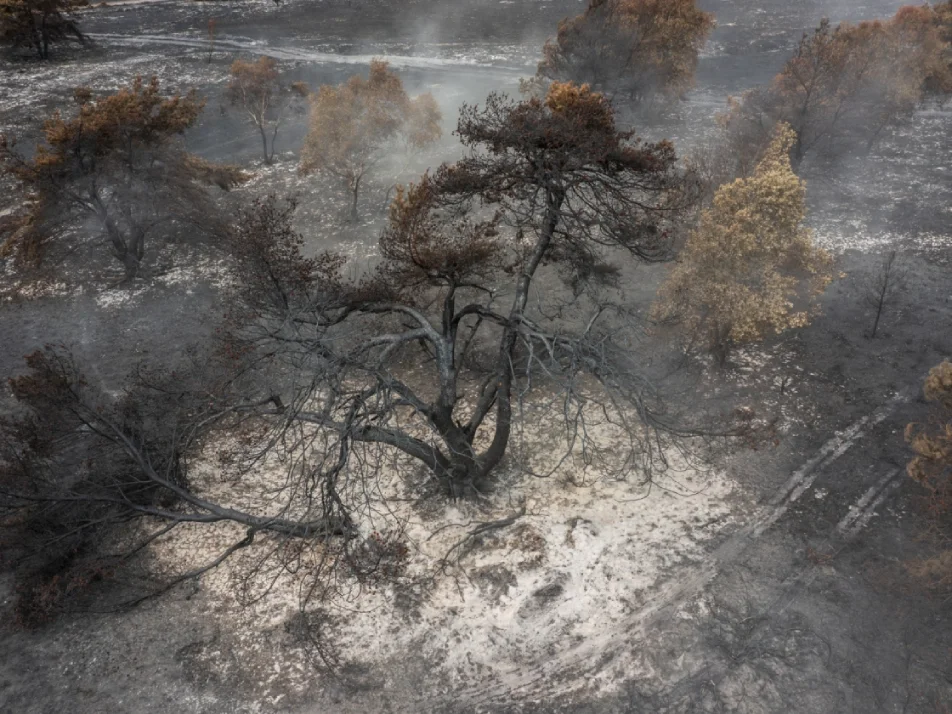
They’ve been out with firefighters tackling multiple blazes across the Midlands, not to mention Dunwich Heath and the New Forest. Helicopter shots brought home the shock of the Lewes train derailment. After the magical but brief distraction of the eclipse, news and business reporters have been focused back on the blazing sun, talking to farmers, the water companies and the overheated public about yet another heatwave.
One thread runs through all these stories: climate change. The burning of fossil fuels is heating the planet, increasing the risk of more extreme heat and creating conditions in which extreme weather becomes more likely or more intense.
The causes of the derailments at Lewes and Wickford have not been confirmed, although reports have raised the possibility that the track buckled in the heat. The fires erupted in grasslands parched by five heatwaves this summer so far. Crop yields are down, reservoirs are depleted and sales of air conditioners have rocketed because this is set to be the hottest UK summer on record, according to the Met Office.
I’ve seen some great reporting which makes the link clear and listened to weather presenters who carefully explain the difference between weather and climate and what the science tells us about the human contribution. But it’s patchy.
Yet new research shows that it’s the editors and commissioners who pay attention to climate change that are most in touch with their audiences.
Climate News Tracker has found that half of the UK public say news organisations should report what happened and, where the scientific evidence supports it, explain the role of climate change.
In the Kantar Media polling, 20% go further and think climate change should be a central part of every extreme weather story. Only 19% say news organisations should mainly report what happened and avoid explaining wider climate issues, while 11% don’t know.
So more than two-thirds want climate context included in extreme weather reporting.
They also want reporting to explain what extreme weather means for people where they live.
Climate News Tracker is an independent data and insights initiative which works with the University of Exeter to publish original research that tracks UK public service media organisations’ reporting on climate change. Full disclosure, I’m on the advisory board.
The ‘audiences find it boring’ problem
As a BBC News editor for many years, running the BBC Newsroom and BBC World Service, I saw huge shifts in the story and how journalists responded. From the earliest signs of temperature change to the sequence of COPs, vanishing glaciers and increasingly strong typhoons, floods and wildfires, the global news agenda couldn’t avoid weather and climate stories.
In the UK it all seemed a bit more remote. And newsrooms had other things to think about.
From the Scottish referendum, through Brexit, domino Prime Ministers, Covid and economic travails, there was always something else to seize attention. I heard colleagues lament the challenge of covering a story that was a complex, long-running trend rather than a picture-rich urgent news story. Others claimed that ‘audiences find it boring’.
I never believed that. I remember research more than a decade ago showing that audiences did care. Some colleagues responded brilliantly, with creative and determined treatments. But others remained wary of the story.
They were wrong then and the evidence is even stronger now. Reporting what happened is only part of the story
Extreme weather is one of the moments when climate change most obviously enters the daily news agenda. Climate News Tracker found that journalists themselves see it as the strongest trigger for climate coverage. But the trigger isn’t always pulled.
During the May heatwave, Climate News Tracker looked at TV and radio programmes across UK public service media. While the heat was widely reported, only 46% of programmes discussed climate change in the context of what audiences were experiencing.
And when it comes to short-form content, audiences are even less likely to get the context. Climate News Tracker analysed short-form videos on the July wildfires in Europe from the Instagram, TikTok and YouTube accounts of the UK’s main public service media organisations. This is where audiences, particularly younger audiences, increasingly encounter news.
Audiences were well-served on the risks and impacts of the fires, but they were much less likely to see explanations of why wildfires were more common or how climate change influences them.
And the chain of explanation rarely goes further, to the burning of fossil fuels that is driving climate change in the first place.
This research should give editors and reporters confidence that audiences want this journalism.
Climate change is not just for the science or weather specialists. General news reporters, business correspondents and transport experts all need to follow the story. Westminster teams too.
It’s not surprising things are fraught.
What’s at stake now is less whether people agree temperatures are rising, but what should be done about it. Speculation about Andy Burnham’s new Chancellor was a climate story. His first COBRA meeting was about climate. The upcoming decision about the Rosebank and Jackdaw oil and gas fields is a climate story.
There are big choices ahead: policy choices, individual consumer choices and business investment choices. Choices are where the politics gets crunchy and the news gets interesting.
Audiences get this and want good reporting that delivers the facts and helps us all understand what’s going on and what it means for us. There are plenty of dramatic pictures too.
Newsrooms don’t need to worry that the story is ‘boring’. Audiences certainly don’t think so.
Email pged@pressgazette.co.uk to point out mistakes, provide story tips or send in a letter for publication on our "Letters Page" blog
